
Women are opting out of dating, marriage, and settling — and the manosphere has made sure we understand exactly why.
What Is “Choosing the Bear”?
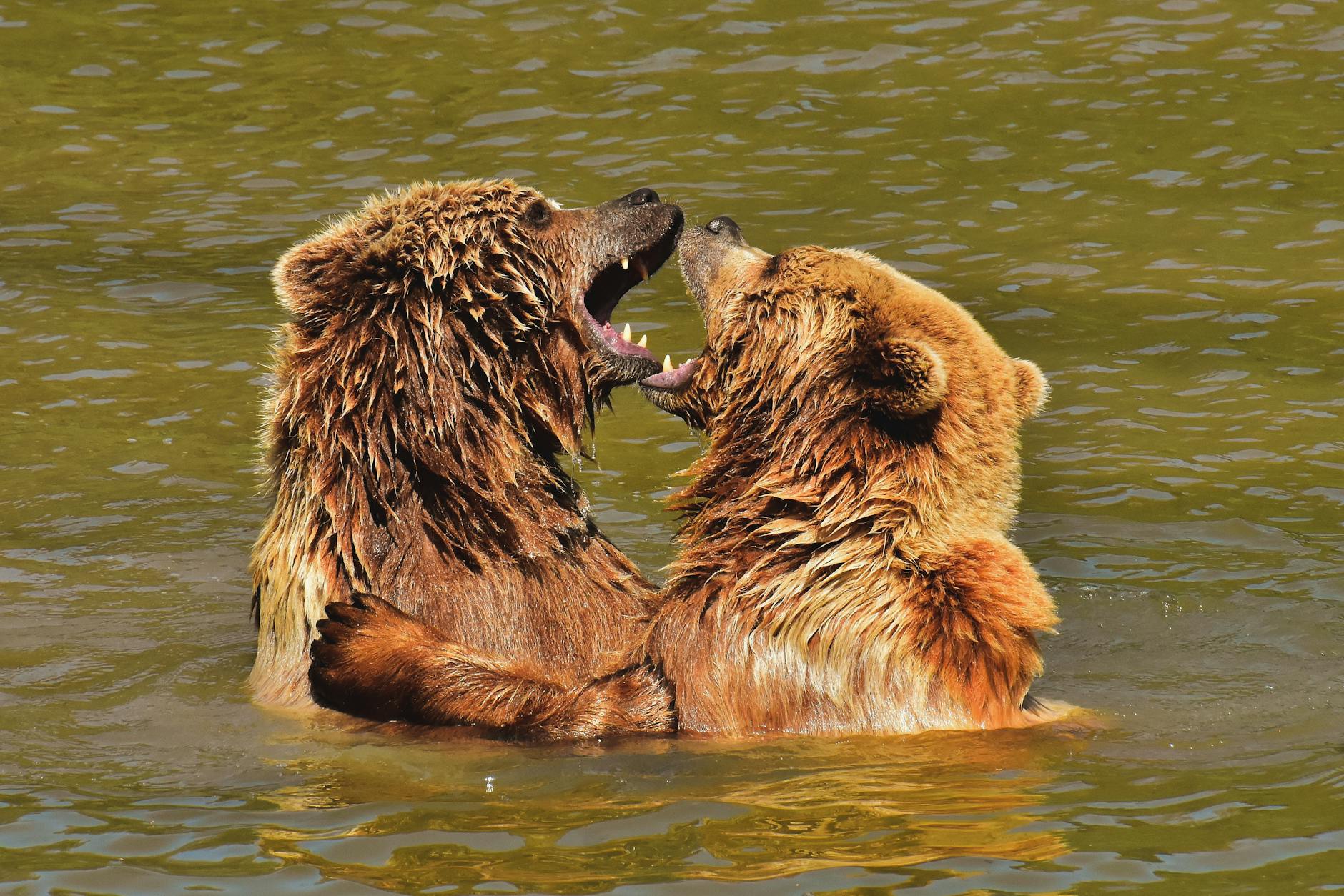
In April 2024, a TikTok account called Screenshot HQ posted a deceptively simple street interview. Eight women were asked one question: Would you rather be stuck in a forest alone with a man, or a bear? Seven of the eight answered immediately, without hesitation, the bear. The video crossed 16 million views in a week. And while plenty of men online responded with outrage, ridicule, or diagrams of bear attack statistics, they fundamentally missed the point. The women weren’t talking about bears.
They were talking about every parking lot they’d mentally mapped for safety. Every drink they’d kept their hand over. Every run, they’d cut short after dark. Every time, they’d mentally calculated whether the man walking behind them was close enough to be a threat. The bear, in this analogy, is knowable. Predictable. Driven by instinct, not malice. You can learn to survive a bear. You cannot always predict a man.
“The bear can only kill me or leave me alone. With a man, there are an infinite number of possibilities.”
— A respondent in the viral thread
That quote became the thesis of a cultural moment. And a year later, the conversation that started hasn’t cooled; it’s evolved. Because what began as a viral hypothetical has become a referendum on something much larger: women are opting out. Not of men specifically, not of love, not of connection — but of settling, of tolerating, of performing gratitude for bare minimum behaviour. The rules of the game have changed, and a significant number of men are playing by a playbook that guarantees they’ll lose.
The Numbers Don’t Lie
Let’s start with the data, because this isn’t a vibe, it’s a documented shift. According to the World Health Organization, roughly one in three women globally — approximately 736 million people — have experienced sexual or physical violence from an intimate partner or a stranger in their lifetime. Meanwhile, there have been fewer than 700 bear attacks in 15 years across the three largest bear-populated regions in the world, and the vast majority were non-fatal and provoked. The bear was never the dangerous choice. It was always the saner one.
~4.7 million women in Canada have been sexually assaulted since the age of 15.
1 in 3 women in Canada has experienced unwanted sexual behaviour in public. 1 in 4 have experienced inappropriate sexual behaviours in the workplace. I am one of 3, with 3 incidents in my lifetime. Perpetrators are known to these women in 87% of the time. Marriage rates have been collapsing for decades. Married couples now lead only 47% of US/Canadian households. In 2024, as of recent Statistics Canada data and surveys (2021-2024), approxiamately 43% – 45% of Canadians aged 15 and over are single (never married), a figure that has been rising over the past several decades. These aren’t just people who haven’t found the right person yet. Many of them have looked at the institution, looked at the available pool, done the math, and quietly declined. A Pew Research survey found that 44% of women are currently unpartnered, and many of them, particularly younger women, are not distressed about it. They’re relieved.
A 2025 survey of over 5,000 single adults in their prime dating years found that three-quarters of women had barely dated in the previous year. Not because they lacked opportunities, but because the dating market feels, and often is, a bad deal. The cost-benefit analysis of modern heterosexual dating has shifted dramatically, and for a growing number of women, the numbers just aren’t adding up. I am one of these women. I feel like men are unable to rise to the challenge of accepting women as equals. Fragile egos create an influx of subpar to mediocre men. I won’t settle for vanilla ice cream when I am rocky road with caramel sauce and sprinkles.
Women Don’t Need Men Anymore. That’s Not a Crisis — It’s Progress.
Here is the uncomfortable truth that sits at the center of all of this: women have, for the first time in history at scale, achieved the economic, social, and legal independence that used to make marriage a survival strategy. Women are now outpacing men in college enrollment, building their own financial security, choosing their own housing, and curating their own lives. The old implicit contract, a woman’s domestic labour and social compliance in exchange for financial security and social legitimacy, has been ripped up. And the men who built their self-worth around being “providers” are finding themselves on uncertain ground.
A growing cohort of women has started asking a different question: not how do I find a man, but what, specifically, would a man add to my life? The bar, it turns out, is higher than it’s ever been, not because women are being unreasonable, but because for the first time, women can afford to have standards. You don’t negotiate down when you don’t have to. Women are happier alone. Men are happier partnered. And yet somehow the cultural conversation has framed this as women failing to show up for men, rather than men failing to make partnership worth it.
Enter the Manosphere
You cannot understand why women are checking out without understanding what men have been checking into. Since the mid-2010s, a loosely connected digital ecosystem known as the manosphere has been feeding a steady diet of grievance, misogyny, and pseudoscience to young men at scale. It includes figures like Andrew Tate, a self-described misogynist currently facing criminal charges, including rape and human trafficking in Romania, along with the red pill community, incel forums, Men Going Their Own Way (MGTOW), pick-up artistry channels, and more mainstream adjacent voices who dress the same ideology in softer language.
The reach of this content is not niche. Research found that 80% of 16-and-17-year-old boys in the UK had consumed Andrew Tate content. A 2025 Movember Foundation report found that two-thirds of young men regularly engage with masculinity influencers online. Tate’s videos accumulated over 54 million YouTube views before his removal from the platform, and after being banned on most major social media platforms, his content continued circulating through fan accounts and reposts. The algorithm, designed to maximize engagement, has made outrage-based misogyny not just visible but profitable.
The content these platforms push is not merely offensive, it’s functionally anti-relationship. It teaches men that emotional vulnerability is weakness. That women are objects to be acquired, not people to connect with. That sex is something men are owed, not something to be mutually engaged in. That asking questions on a date, doing emotional labour, or showing genuine curiosity about a woman’s interior life is somehow beneath them. The result is a generation of men who have been algorithmically trained to be, by every meaningful measure, terrible partners.
When the political values of a significant proportion of young men signal that they view women’s bodily autonomy as negotiable, it creates a very reasonable dating dealbreaker. You cannot separate someone’s politics from their values, and you cannot separate their values from how they will treat you. The ideological divergence between young men and young women is not just a curiosity for political scientists; it is reshaping who is willing to date whom, and under what conditions.
What Women Are Actually Asking For
Let’s be clear about something: women are not asking for the moon. The widespread frustration is not about impossibly high standards; it’s about consistently unmet basic ones. Dating discussions online are flooded with women cataloguing the same complaints: men who don’t ask questions on dates. Men who expect women to manage all the emotional labour of a relationship. Men who practice what’s being called “weaponized incompetence” feigning inability to perform domestic tasks to avoid accountability. Men who disappear when things get difficult, then resurface when they want something.
These are not complaints about men being imperfect. These are complaints about men being disengaged, present in body, absent in effort, and increasingly resentful when women name the imbalance. A woman who has built her own career, cultivated her own friendships, and developed her own life is not going to be grateful for a relationship that adds stress and emotional drain without reciprocal investment. The era of settling, staying because the alternative was too difficult, is over. Women have options now. Solitude, in many cases, has turned out to be one of the better ones. I am one of those women who prefer solitude to dating. When I spend just 3 days on a dating site, I want to just pack it in and buy some “toys” for myself.
Where Do We Go From Here?
The manosphere has done its damage not just to women; it has damaged men. It has given lonely, struggling young men a scapegoat (women, feminism, modernity) instead of tools. It has taught them that emotional intelligence is a weakness rather than the most important relationship skill there is. It has promised them dominance and delivered isolation. The loneliness epidemic among men is real, but it will not be solved by teaching men to blame women for it.
The men who are thriving in relationships right now are the ones who learned the opposite lesson. They show up curious. They ask questions. They sit with discomfort without turning it into hostility. They understand that being a partner means being willing to do the unglamorous, emotionally demanding work of actually knowing another person. These men exist, and women who have found them know exactly how different it feels from the alternative. The bar is not unreasonably high. It is, however, higher than “I showed up.”
The woman who said she’d choose the bear was not saying she hates men. She was saying: I have learned, from personal experience, from the experiences of every woman I know, from a lifetime of keys between fingers and strategic parking and drinks covered with palms, that an unknown man represents a level of unpredictability I cannot fully account for. A bear is a known variable. A strange man is not.
Women don’t need men to survive anymore. What they need, what they are searching for and increasingly struggling to find, is a reason to choose men. Not out of obligation, not out of fear, not out of social pressure, but because the partnership genuinely adds something worth having. I feel this to my core. If you add no value, why would I settle? I hope that men can start to understand their part in this. History has shown that a woman’s right to bodily autonomy, her protections from predators, and her overall well-being have been far from a priority in this patriarchal society. The track record speaks for itself. In the meantime, we are educating ourselves, driving successful careers, buying our own stuff, forging amazing friendships and waiting for men to step up. Not because they have to, but because they want to.
For now, I choose the bear.
If anything I have confessed or created resonated, please let me know