
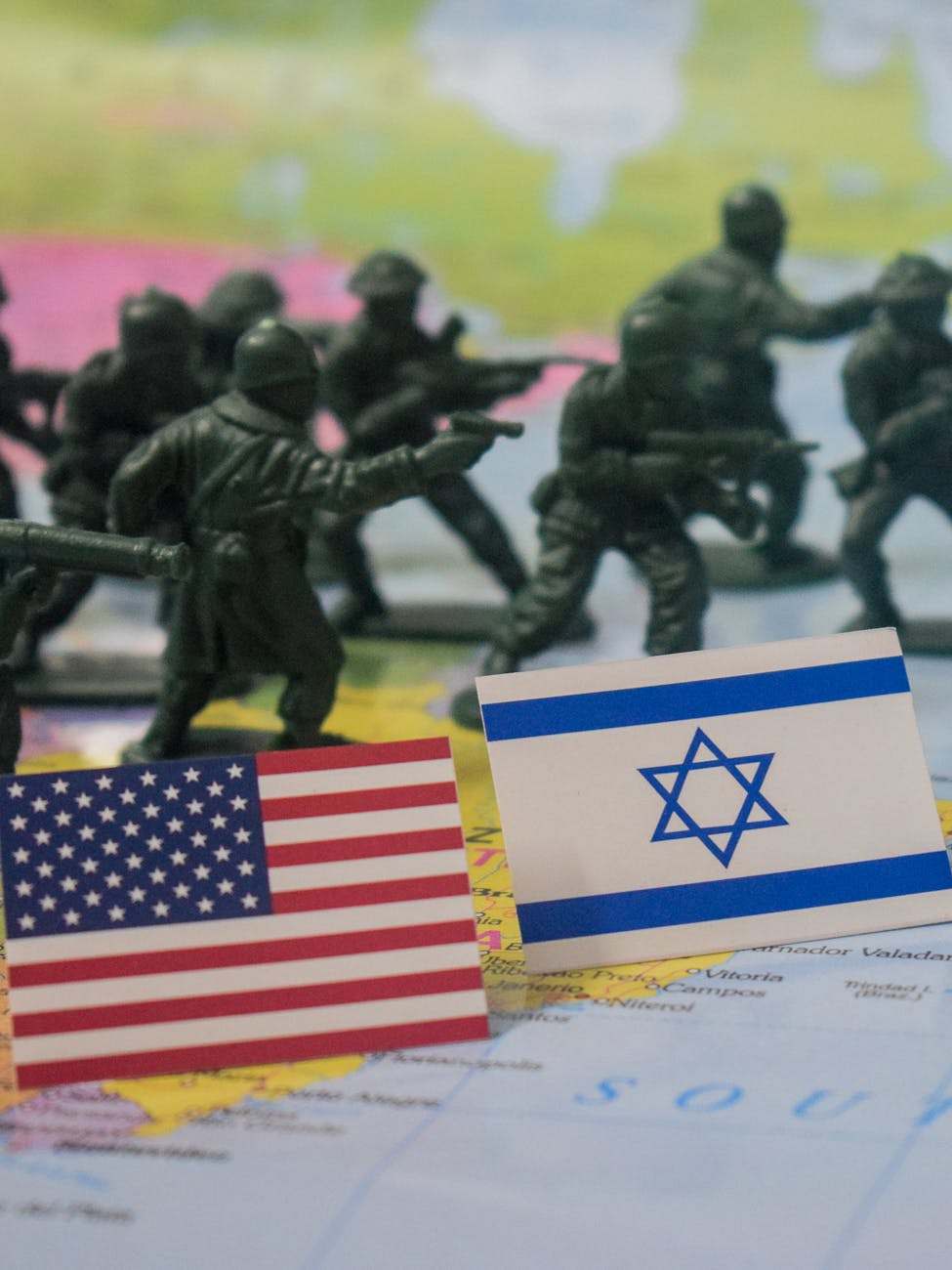
You cannot understand today’s Middle East without understanding the decades of betrayal, revolution, and imperial ambition that got us here. This is the history they skipped in your high school class.
Part I: How the US Made Iran Its Enemy
Let’s start with 1953, because that’s where the wound begins.
Iran had a democratically elected Prime Minister named Mohammad Mosaddegh. He was a nationalist. A reformer. A man who looked at the vast oil wealth flowing out of his country and into British coffers and said: No more. He nationalized the Anglo-Iranian Oil Company, which we now know as BP, and gave Iranians control of their own resources. The British were furious. The Americans were nervous. So together, in an operation the CIA later formally acknowledged, they overthrew him.
The operation was called AJAX. They bribed military officers, hired street thugs, and manufactured a crisis. Mosaddegh was arrested, tried, and spent the rest of his life under house arrest. In his place, the US and UK reinstated Shah Mohammad Reza Pahlavi – a monarch who ruled with an iron fist, modernized the country in ways that pleased the West, and tortured and disappeared anyone who disagreed with him through his feared secret police, the SAVAK.
For 26 years, the US propped up this regime. Weapons. Training. Diplomatic cover. The Shah was Washington’s man in the region, a bulwark against Soviet influence and a reliable oil partner. That he was also a brutal dictator was a detail easily overlooked from the Oval Office.
Then came 1979.
The Revolution the US Didn’t See Coming
The Iranian Revolution was not simply an Islamic uprising — it was a popular explosion of rage against the Shah and everything he represented, including his American patrons. Ayatollah Khomeini channelled decades of humiliation into a movement that swept away the monarchy and replaced it with the Islamic Republic. The takeover of the US Embassy in Tehran and the 444-day hostage crisis that followed was not random — it was a direct statement about the relationship between US power and Iranian suffering.
The message to Washington was simple: we know what you did to us, and we will never forget.
What happened next only deepened the wound. When Iraq under Saddam Hussein invaded Iran in 1980, triggering one of the bloodiest wars of the 20th century, the United States backed Iraq — providing intelligence, loans, and diplomatic support even as Saddam used chemical weapons against Iranian soldiers. The US knew. They helped anyway.
Iran’s hatred of the United States is not irrational. It is the entirely predictable result of a 70-year relationship built on exploitation, manipulation, and betrayal.
The history they don’t teach
Part II: The Israel Equation
Israel and Iran were not always enemies. Under the Shah, they had quiet but cooperative relations — they shared a common wariness of Arab nationalism and Soviet expansion. Israeli advisors helped train SAVAK. Trade flowed. It was, in the language of geopolitics, a marriage of convenience.
The 1979 Revolution ended that entirely. The new Islamic Republic declared Israel an illegitimate state — a colonial imposition on Muslim land — and began supporting groups committed to its destruction: Hezbollah in Lebanon (which Iran essentially created), Hamas in Gaza, and various Palestinian factions. Iran’s anti-Israel posture became a central pillar of its foreign policy and its ideology.
But here’s what gets lost in the noise: Iran’s threats against Israel serve an important domestic purpose. The Islamic Republic is not popular at home. The economy has been crippled by sanctions. Protests, particularly the Women, Life, Freedom movement of 2022, have shaken the regime. When you’re struggling to justify your own rule, an existential foreign enemy is invaluable. The Great Satan (America) and the Little Satan (Israel) aren’t just talking points; they’re the foundation of the regime’s legitimacy.
This does not mean Iran’s threats are not real. They are. Hezbollah has 150,000 rockets pointed at Israel. Iran’s proxy network stretches from Lebanon to Yemen to Iraq to Syria. When Iran says it wants to reshape the region, it has the tools to try.
Part III: Netanyahu’s End Game — And the Trump Card
Now let’s talk about Benjamin Netanyahu, because this is where the story gets genuinely alarming.
Netanyahu has spent decades arguing that Iran is an existential threat to Israel — and he’s not entirely wrong. But his response to that threat has consistently served his own political survival as much as Israeli security. He has governed under a cloud of corruption charges. He has repeatedly stoked conflict at moments when his domestic position was weakest. And he has, with remarkable skill, made himself indispensable to the right-wing coalition that keeps him in power by ensuring Israel is always in a state of crisis that demands a strong man at the helm.
His endgame, as best as analysts can read it, is this: the permanent neutralization of Iran’s nuclear capability and its regional proxy network, ideally achieved with American blood and treasure, not Israeli. A ground-shaking strike on Iranian nuclear facilities. The destruction of Hezbollah as a military force. A reconfigured Middle East where Israel’s dominance is unchallenged and the Abraham Accords normalize relations with Gulf states, permanently isolated from the Palestinian cause.
To achieve this, Netanyahu needs the United States fully committed — militarily, diplomatically, financially. And here is where Donald Trump enters the picture.
The Puppet and the Puppeteer
Donald Trump’s relationship with Netanyahu is one of the most extraordinary examples of tail-wagging-the-dog in modern American foreign policy. Trump is a man who craves validation, who responds to flattery, who has a genuine ideological affinity with the Israeli right, and who has significant political and financial relationships with American evangelical and Jewish donor networks that make supporting Israel non-negotiable.
Netanyahu understands all of this perfectly.
During Trump’s first term, Netanyahu obtained things from the United States that no previous Israeli government had managed: the recognition of Jerusalem as Israel’s capital, the relocation of the US Embassy, US recognition of Israeli sovereignty over the Golan Heights, and the withdrawal from the Iran nuclear deal (JCPOA) — a deal that, whatever its flaws, had placed verifiable constraints on Iran’s nuclear program. This was one of the biggest mistakes an American administration has ever made.
In Trump’s second term, the dynamic has intensified. Netanyahu has been working openly to push the US toward military confrontation with Iran. The framing is always the same: Iran is about to get a nuclear weapon. The window to stop them is closing. America must act. Now.
What makes this manipulation so effective is that it’s not entirely fabricated. Iran has accelerated its nuclear program, partly in response to the US withdrawal from the JCPOA. The threat is real enough to be credible. But Netanyahu’s interest in resolving it diplomatically has historically been minimal. A negotiated settlement that leaves Iran intact as a state, even a non-nuclear one, is not his preferred outcome. His preferred outcome is regime destabilization, ideally through American-led military action that he can present as both necessary and inevitable.
Netanyahu doesn’t need Trump to be smart. He needs Trump to be angry, impulsive, and surrounded by people who tell him that destroying Iran is both easy and righteous.
Reading the room
Trump’s advisors in his second term, many of them deeply aligned with the Israeli right, have created an environment where pushing back on Netanyahu’s agenda is politically dangerous. The result is an American foreign policy that is increasingly shaped by Israeli strategic priorities rather than American ones.
This is not antisemitism to say. It is a structural observation about power, leverage, and the extraordinary success of a small nation in shaping the foreign policy of the world’s largest superpower in ways that serve its own interests. Every nation does this to the extent it can. Netanyahu is simply very, very good at it.
The Stakes
A war between the United States and Iran is not a repeat of Iraq or Afghanistan. Iran has a population of 90 million, a sophisticated military, battle-hardened proxy forces across the region, and has closed the Strait of Hormuz through which roughly 20% of the world’s oil supply travels. The economic consequences alone are going to be catastrophic. The human cost could be measured in tens of thousands of lives at a minimum. The displacement of millions and the destruction of critical infrastructure have already begun.
And here is the deepest irony: a US military strike on Iran has strengthened the regime. Nothing unites a restive population behind its government faster than foreign bombs. The Iranian people, who have risked their lives protesting against theocracy, have been handed a gift by Washington, proof that their rulers were right all along about American intentions.
Netanyahu knows this. He doesn’t care. His horizon is Israeli security and his own political survival, not the long-term stability of the Iranian state.
Trump, meanwhile, is playing geopolitics like a man who governs by reading the FOX News chyron. He wants to be the tough guy. He wants to make deals. He wants to be the president who solves the Middle East. He is being duped into a war that will define his second term. It could, in all probability, end his second term, and he appears largely unbothered by this.
The Bottom Line
Iran hates America because America earned that hatred, over decades, through coups and proxy wars and sanctions that have ground ordinary Iranians into poverty while leaving their rulers largely unaffected.
Israel and Iran are in a genuine, dangerous conflict driven by ideology, regional ambition, and the legitimate security concerns of both parties.
And Netanyahu, brilliant, ruthless, and utterly focused on his own survival and vision, is steering the most powerful military in human history toward his preferred outcome, using a president who confuses confidence with strategy and loudness with strength.
The question is not whether this ends badly. The question is how badly, and who pays for it.
Spoiler: it won’t be Netanyahu.
Stay Fierce | The World Will Adjust
This is an opinion piece rooted in documented historical events and open-source geopolitical analysis. Sources include declassified CIA documents on Operation AJAX, the JCPOA text, and reporting from outlets including The Atlantic, Foreign Affairs, Haaretz, and The Guardian.
If anything I have confessed or created resonated, please let me know